
- ATERUI II is the world’s fastest supercomputer dedicated to astronomy
- Simulating phenomena in the Milky Way may help us understand how the universe will evolve
- ATERUI II’s simulations may also help us find alien life
Thanks to telescopes like the and spacecrafts like , we know more than ever about the Milky Way Galaxy and what lies beyond. However, these observations only tell part of the story.
How did our incomprehensively vast universe come to be? What’s it going to look like millions of years from now? These age-old questions are now getting answers thanks to simulations created by supercomputers.
One of these supercomputers is a Cray XC50, nicknamed and located at the (NAOJ). It is the fastest supercomputer dedicated to astronomy and is ranked #83 of the most powerful supercomputers in the world.
Named after a prominent 9th century chief, the ATERUI II is located in the same city where led his tribe in a battle against Emperor Kanmu. Despite the odds, Aterui and his people fought well. Since then, Aterui has become a symbol of intelligence, bravery, and unification.
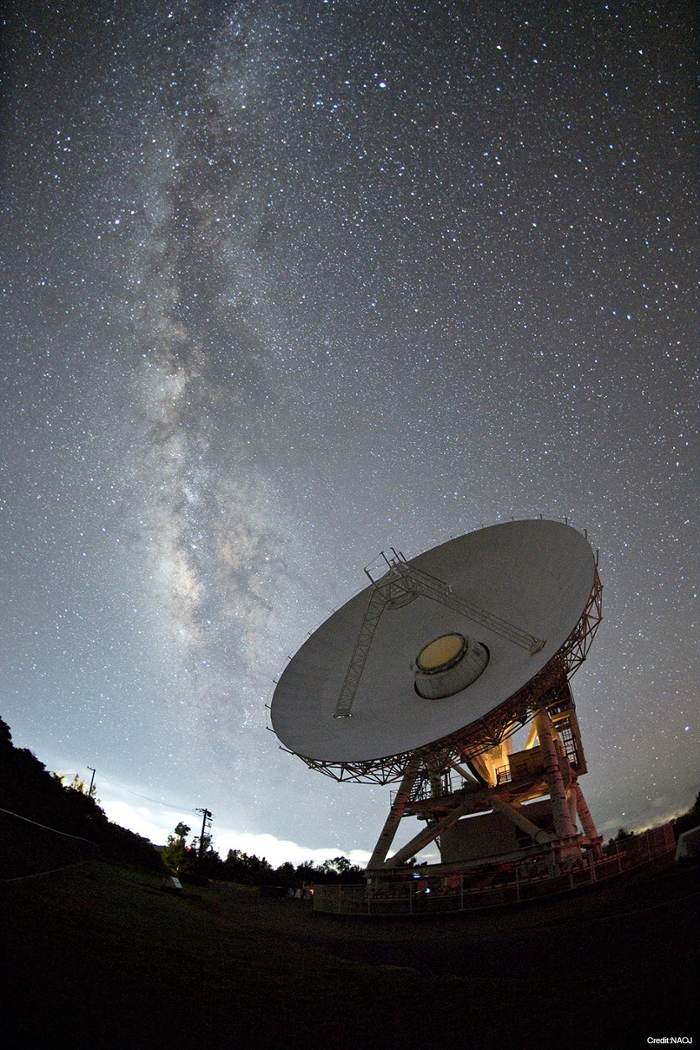 “We named the supercomputer after him so that our astronomers can be brave and smart. While we are not the fastest in the world, we hope the ATERUI II can be used in a smart way to help unify us so we can better understand the universe,” says Eiichiro Kokubo, project director of the at NAOJ.
ATERUI II was officially launched last June and serves as a bigger and better version of its decommissioned predecessor, ATERUI. With more than 40,000 processing cores and 385 Terabytes of memory, ATERUI II can perform as many as 3 quadrillion operations per second.
In other words: it’s an incredibly powerful machine that is allowing us to boldly go where no one has ever gone before, from the to the . It’s also exceedingly popular with researchers—150 astronomers are slated to use the supercomputer by the end of the year.
ATERUI II’s unique power means it is capable of solving problems deemed too difficult for other supercomputers. For example, an attempt to simulate the Milky Way on a different machine meant researchers had to group the stars together in order to calculate their gravitational interactions.
ATERUI II doesn’t have that problem. It’s able to calculate the mutual gravitational interactions between each of the more than 100 billion stars that make up our galaxy individually, allowing for the most detailed Milky Way Galaxy simulation yet.
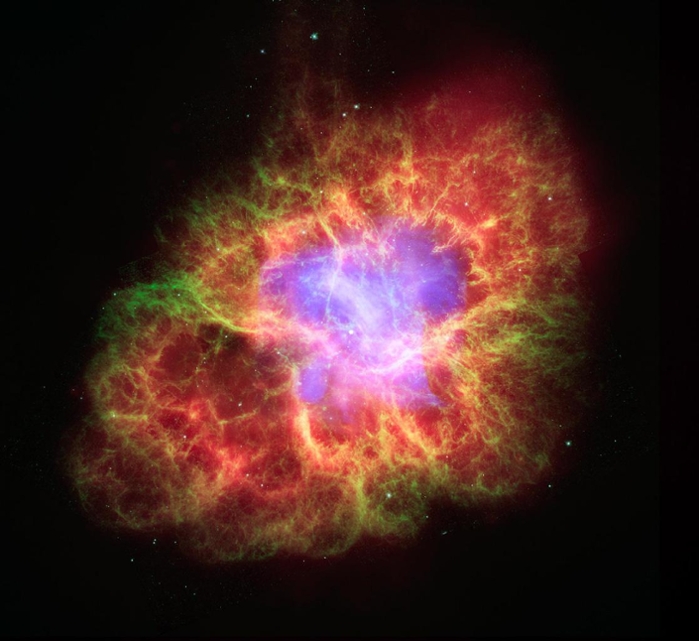 While computational astronomy is a fairly young field, we need it in order to understand the universe beyond just observing celestial bodies. With its superior computational power, Kokubo says there are plans for ATERUI II to simulate everything from Saturn’s rings through a to the large scale structure of the universe.
“If we produce the universe in a computer, then we can use it to simulate the past and the future as well,” Kokubo says. “The universe exists in four dimensions: the first three are space and the last one is time. If we can capture the space, then we can better observe it through time.”
ATERUI II isn’t only working on ways to better understand the stars and planets that make up the universe, it is also being used to explore the possibility of alien life. This starts with life on Earth.
“If we can simulate and understand the origin of life on Earth and what it means to be habitable, we will be even closer to finding it elsewhere in the universe,” Kokubo says. “I’m interested in life and why we are here.”
Kokubo isn’t alone. The mystery of how we came to be and what it all means has fascinated mankind for centuries. Our unknown origins have been explored in great pieces of art and literature throughout history and are at the core of every religion. Now, thanks to ATERUI II, we are one step closer to getting our answer.
Read more:
