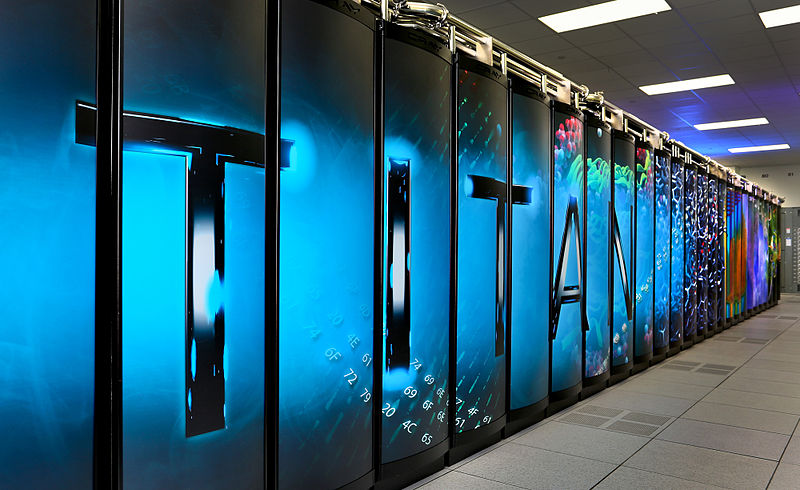
The US was once a leader in supercomputing, having created the . But as of November 2017, TOP500 ranked , the fastest American-made supercomputer, only fifth on its . In contrast, China holds the first and second spots by a whopping margin.
But it now looks like the US Department of Energy (DoE) is ready to commit to taking back those top spots. In a CNN opinion article, Secretary of Energy Rick Perry proclaims that “,” and we at Science Node couldn’t agree more. To get a better understanding of the DoE’s plans, we sat down for a chat with .
Why is it important for the federal government to support HPC rather than leaving it to the private sector?
 A significant amount of the Office of Science and the rest of the DoE has had and will continue to have supercomputing needs. The Office of Science produces tremendous amounts of data like at , and all of our national labs produce data of increasing volume. Supercomputing is also needed in our mission, which fulfills very important modeling needs for Department of Defense (DoD) applications.
But to Secretary Perry’s point, we’re increasingly seeing a number of private sector organizations building their own supercomputers based on what we had developed and built a few generations ago that are now used for a broad range of commercial purposes.
At the end of the day, we know that a secondary benefit of this push is that we’re providing the impetus for innovation within supercomputing.
Yesterday’s supercomputers are today’s smartphones and laptops, so a very important effect is that we drive innovation for the rest of the country.
We assist the broader American economy by helping to support science and technology innovation within supercomputing.
How are supercomputers used for national security?
 The NNSA arm, which is one of the three major arms of the three Under Secretaries here at the department, is our primary area of support for the nation’s defense. And as various testing treaties came into play over time, having the computing capacity to conduct proper testing and security of our stockpiled weapons was key. And that’s why if you look at our three exascale computers that we’re in the process of executing, two of them are on behalf of the Office of Science and one of them is on behalf of the NNSA.
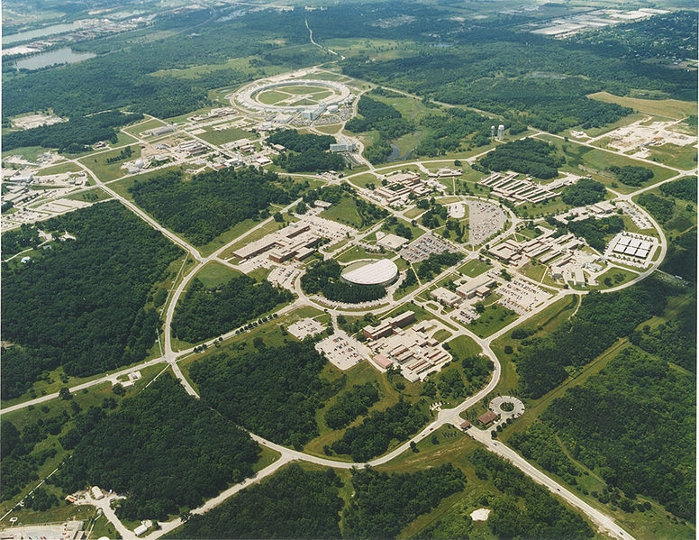
One of these three supercomputers is the Aurora exascale machine currently being built at , which Secretary Perry believes will be finished in 2021. Where did this timeline come from, and why Argonne?
There was a group put together across different areas of DoE, primarily the Office of Science and NNSA. When we decided to execute on building the next wave of top global supercomputers, an internal consortium named the was formed.
 That consortium developed exactly how to fund the technologies, how to issue requests, and what the target capabilities for the machines should be. The 2021 timeline was based on the CORAL group, the labs, and the consortium in conjunction with the Department of Energy headquarters here, the Office of Advanced Computing, and ultimately talking with the suppliers.
The reason Argonne was selected for the first machine was that they already have a leadership computing facility there. They have a long history of other machines of previous generations, and they were already in the process of building out an exascale machine. So they were already looking at architecture issues, talking with Intel and others on what could be accomplished, and taking a look at how they can build on what they already had in terms of their capabilities and physical plant and user facilities.
Why now? What’s motivating the push for HPC excellence at this precise moment?
A lot of this is driven by where the technology is and where the capabilities are for suppliers and the broader HPC market. We’re part of a constant dialogue with the Nvidias, Intels, IBMs, and Crays of the world in what we think is possible in terms of the next step in supercomputing.
 Why now? The technology is available now, and the need is there for us considering the large user facilities coming online across the whole of the national lab complex and the need for stronger computing power.
The history of science, going back to the late 1800s and early 1900s, was about competition along strings of types of research, whether it was chemistry or physics. If you take any of the areas of science, including high-performance computing, anything that’s being done by anyone out there along any of these strings causes us all to move us along. However, we at the DoE believe America must and should be in the lead of scientific advances across all different areas, and certainly in the area of computing.
Read more:
