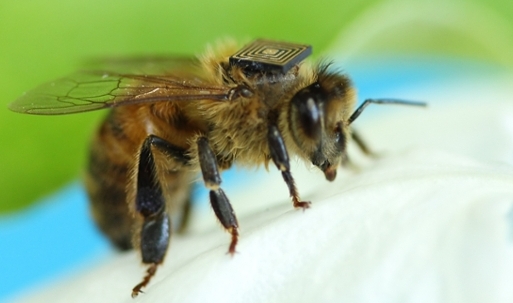
- Micro-sensors attached to thousands of bees to help investigate their health.
- Bees are under threat globally from pathogens, pesticides and agriculture intensification.
- Monitoring the behavior of these pollinators can combat population decline.
There’s a big buzz coming from the land down under. Researchers from the in Australia are harvesting from micro-sensors on thousands of bees in the state of . The research program is the first of its kind and is part of the , an international collaboration of researchers, beekeepers, farmers, and technology companies.
Bees play a vital role in pollinating food crops. Roughly one third of the food humans consume each day relies on the little creatures, amounting to billions of dollars in the global economy. However, bee populations are facing threats from a number of factors including pathogens, pesticides, and agriculture intensification.
Down under, biosecurity is a serious issue. Because of Australia’s geographic isolation and subsequent fragile ecosystem, imports are tightly regulated. One of the pests that Australia is trying to keep out is the – a parasite that transmits pathogens which can rapidly lead to the death of bee colonies.

Due to their size, monitoring how bees spend their time has traditionally been a struggle for scientists. Researchers have tried painting individuals with color codes and monitoring their movements via cameras – a tedious task. But with the new tags the process is much easier. The micro-sensor ‘backpacks’ – measuring 2.5mm x 2.5mm and weighing about 5 milligrams each – are attached in a matter of seconds and record when the bees pass checkpoints.
This data is then shared with scientists worldwide via the cloud to build models revealing how bees interact with the environment. Researchers use this information to analyze the effects of stressors such as disease, pesticides, air pollution, water contamination, diet, and extreme weather on the bee’s ability to pollinate.
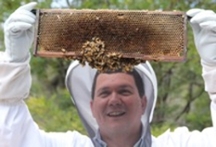
“These RFID tags usually only work within a few mm-range. So, bees need to almost touch the antennas that are installed in places where they will certainly pass, for example, the entry of the hives,” says Paulo de Souza, head of the research group behind the development of the technology. “We managed to increase the range of reading in a few orders of magnitude. This allows us to read the signals more efficiently, reduce the loss in readings and be more flexible with the setup.”
Bees are considered fairly predictable in their behavior hence deviations can indicate stress or environmental changes. Modeling the bees’ movements therefore can help to identify the cause of the change and protect the colony.
The CSIRO are now working with Brazil’s to utilize the sensors in the Amazon so they can compare behavior between the regions.
Further work is being done to make even smaller sensors – 1.5mm x 1.5mm – which will interfere less with the bees’ behavior. But the reduced size of the sensors presents a new problem – small battery technology is not powerful enough.
“The solution we came up with was an energy device that harvests energy from the movements of bees and a battery that is built on a 3D-structure,” says de Souza. “This structure increases the energy density to be stored. A bumble bee can produce as much as 0.5W in one hour of buzz-pollination.”
The researchers plan to make small enough sensors to be used on fruit flies and mosquitoes in the future, enabling information to be captured all around the world in unprecedented density.
