- Over 80 percent of patients with symptoms of traumatic brain injury (TBI) show no structural abnormalities
- Computationally-intense high-resolution MEG technology may provide more answers
- Unused cycles on supercomputers speed research time from decades to just 1-2 years
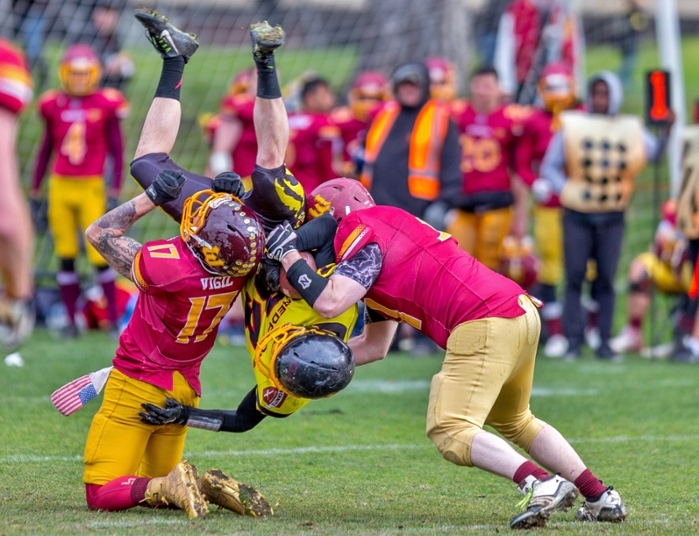
From children’s playing fields to professional stadiums to battlefields, doctors are more and more worried about that lurks after a seemingly minor concussion. Kids and adults may walk off the field and suffer headaches, difficulty thinking, memory problems, attention deficits, and mood swings for weeks, months, or longer.

A key problem in finding better ways to diagnose and treat concussion is that imaging studies show no abnormalities in more than 80 percent of TBI patients. For most, doctors don’t know whether the imaging methods lack sensitivity or whether there is no structural damage to detect.
Don Krieger is part of a team of clinician-researchers at the who are studying TBI. They produce very high resolution functional brain images from recordings using a powerful new method called “referee consensus processing.” MEG measures the magnetic fields caused by cooperative nerve-cell activity. The technology is noninvasive, silent, and safe. But it’s also computationally expensive, requiring supercomputers to generate images.
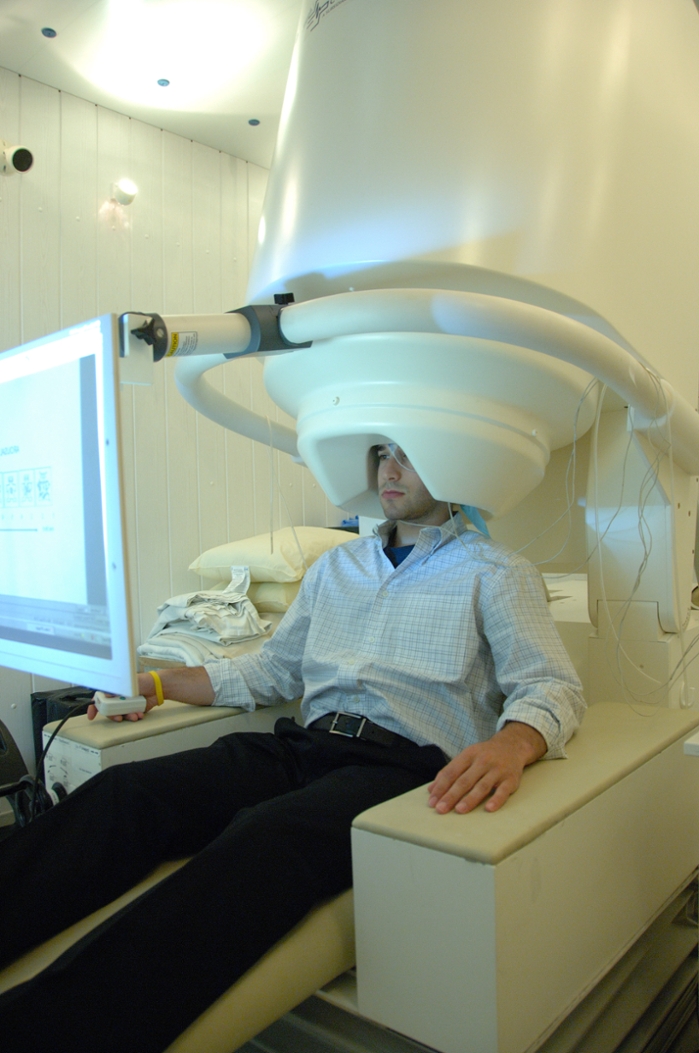 Their calculations rely on opportunistic use and other unused cycles on computing resources. Their results show great promise in providing high resolution functional images of normal and TBI-affected brain activity.
“We’re trying to understand concussion,” says Krieger. “Even when nothing can be found in standard brain imaging studies, about 20 percent of those with concussion experience persistent symptoms for months or years. A detailed functional exam almost always reveals real problems, but we typically cannot identify the neurologic cause.”
How PSC and XSEDE helped
To carry out their computations, the team used the . A member organization of XSEDE, OSG is a supercomputing resource composed of compute cycles donated by government laboratory and academic computing centers throughout the Americas. Using the OSG reduced the time required for the calculations from many decades to just one to two years.
To reduce that time even further, they turned to two additional XSEDE systems: at the PSC, and Comet at the . Employing unused cycles on the two supercomputers made more computing time available, did not impact other researchers using the same machines, and required only a few changes in the Pitt team’s software.
As part of XSEDE's Novel and Innovative Projects program, XSEDE collaborative support service experts Anirban Jana and Derek Simmel of PSC and Mahidhar Tatineni of SDSC helped the team make these adjustments in just a few days.
 Krieger and his colleagues analyzed MEG data from 64 volunteers with persistent symptoms of TBI, most of whom were combat veterans. They compared the scans with MEG data from a control group of 414 similar individuals who did not have TBI symptoms. This second group of scans was collected by the .
Comparing patterns of cooperative neural activity from brains that are unaffected by TBI with those from symptomatic patients will help the scientists identify the mechanisms which cause symptoms in TBI. It may also help them find better treatments.
“The calculations required for our work would simply not get done without the support of XSEDE, the OSG, SDSC, PSC, and others,” says Krieger. “Processing the most important fraction of the control data from the CamCAN cohort required 15 million core hours. That would conservatively cost at least $120,000 on a commercial cloud-computing resource.”
Taking advantage of idle moments
As both Comet and Bridges have become progressively busier, the referee consensus solver proved to be an ideal application for utilizing idle computing cycles, either in bulk or in short bursts during periods when resources are not heavily used.
Using the OSG with help from Comet and Bridges enables completion of the time-sensitive calculations for a single volunteer in less than 24 hours — important for patients visiting Pittsburgh from a distance. The referee consensus solver developed by Krieger and his colleagues enables reliable measures of regional brain activity, excitability, and network coupling strength. That means that the Pitt investigators have much more reliable measures than ever before to help in diagnosis of illness related to brain activity in each individual patient.
